China's South to North Water Diversion Project, consisting of three routes diverting water from the Yangtze River Basin to north China. Two of the three routes have already been operational, and the west route is under study. Credit: The Guardian. Edited.
 David Zhou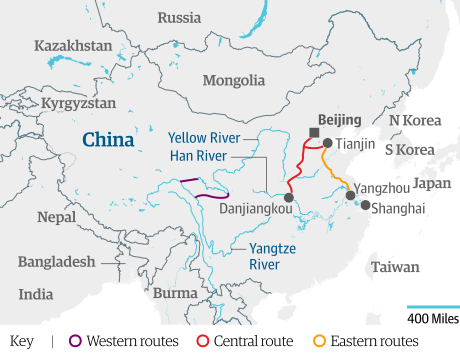
While the World Water Day of 2026 themed on water and gender, China picked another topic that was much less socially concerned, “National Water Network, Century Blueprint”, for its annual water week. The mega project mentioned, the National Water Network, is celebrated by China as “the world’s largest water infrastructure network”, both a proud witness to its achievement and another ambition in managing one of the country’s most valuable resources.
Chinese Minister of Water Resources Li Guoying’s essay in Qiushi, the official theoretical journal and news magazine of the Chinese Communist Party, eloquently articulates a rational framework of the project, which he envisions as a nationwide, multi-level, highly engineered system integrating water allocation, flood control, ecosystem management, and digital monitoring. The characteristics of the project are pronounced – systematic and hierarchical (national and local networks) with efficient and optimised allocation, secure and risk managed, eco-friendly, smart and digitally enabled, and highly integrated across basins.
In his essay, Minister Li was unreserved about the structural water imbalance of China: north–south asymmetry, and seasonal rotation of floods and droughts. Moreover, the country is becoming increasingly water insecure for the growing risks from climate change and extreme events. The existing system, in spite of significant improvements, has incomplete integration, uneven standards, and limited efficiency. These are solid justification for China to build its modern water infrastructure as a strategic national system for water security, economic development, ecological protection, and climate resilience. Yet, there are still a few caveats that should be taken seriously.
First, understanding the water and ecological system in a deterministic and reductionist framework is likely to be insufficient. When life is involved in the picture, water is no longer the equivalent of a homogeneous mass of H₂O molecules. The system, characterised by nonlinear dynamics, feedback loops, and cross-scale interactions, operates with structural and epistemic complexity and uncertainty arising from incomplete knowledge of system behaviour and the simplifying assumptions embedded in models. This does not imply a nihilistic rejection of modern quantitative methods, but does call for cautious and conditional interpretation and decision-making.
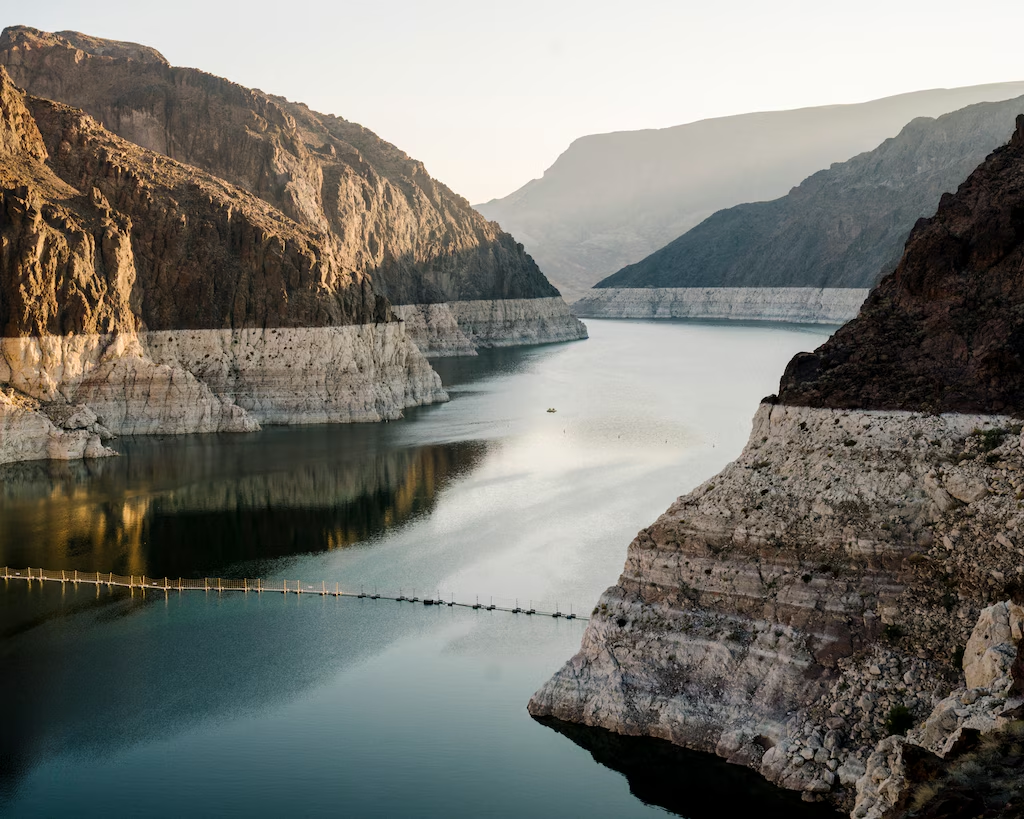
Moreover, climate change is fundamentally changing the basis on which our existing knowledge and methods are built. With the “death of stationarity”, the data and empirical methods we have accumulated might no longer be valid to drive our models and therefore inform decision-making. Simulations and, more often than not, extrapolations, based on these data and methods could potentially lead to completely different conclusions, and policies based on which delivering undesirable or even in some cases, disastrous, outcomes. The Colorado River Aqueduct in US presents quite a vivid example in this case. The system was designed and legally allocated based on early 20th-century data that are now understood to have been anomalously wet. However, long-term droughts in recent years have significantly constrained its capacity and degraded its reliability, causing increasing competition and conflict between different users, and leading to dire ecological consequences.
The advancement in big data processing and artificial intelligence might seem to promise, to some people, a potential of control over the previously uncontrollable. However, the data and method problem aforementioned is still a stain on the rosy picture due to misalignment between past data and current or future conditions (distribution shifts). How the models are trained, and what data they are trained with are critical questions to answer if any responsible policy decision is to be made, as these models are even more data-hungry and often less physically constrained. To this regard, Chinese scientists might also face endogenous disadvantages due to the lack of quality historical data series, until they were able to produce long-term, continuous, and standardised sets after the country pulled itself out of periods of historical disruption in late 20th century.
Second, a large scale water network addresses physical constraints, but it does not resolve governance risks. Water management is not a simple allocation of the resource itself to maximise benefits, but often balancing interests between stakeholders, and therefore it is inherently political. It requires robust institutional arrangements to safeguard rights, resolve conflicts, and uphold equity among stake-holding parties spanning across a vastly wider domain than the infrastructure sphere only. The absence of inclusive institutions and reliance on centralised top-down approach of the government would naturally invite distortions in information, filter of feedbacks, bias in decision-making, and eventually, failure of the system.
One manifestation of such governance risks, particularly under centralised and top-down systems, is infrastructure over-investment, as demonstrated by China’s high-speed rail system (CRH). CRH rapidly expanded over the last two decades to become the world’s largest of its kind, reaching a total length of more than 50,000 km in 2025. In spite of the benefits the system has garnered, this large-scale and centrally coordinated infrastructure also saw misalignment between planned capacity and actual demand, and accordingly, localised over-investment and misallocation of capital. A considerable number of CRH stations were built, but quickly suspended service or were even never used (see map below). The top-down approach of expansion incentivises local governments to meet centrally set targets by prioritising visible infrastructure through “vanity projects” that makes less economic sense, as their interest may lie in rapidly accumulating political track records, not necessarily corresponding to actual demand or stakeholder needs.
Similar examples are not difficult to track inside the water sector. The Sponge City Programme of China embraces a principle that has been proved effective in many water management cases around the world – storing excessive water as much as possible locally to avoid causing trouble in the downstream. However, similar to the CRH case, under a top-down approach of implementation, much less attention was paid to system integration, public participation, long-term operation and maintenance. Piloting projects, such as that in Zhengzhou, drew significant public question, in particular when extreme events like the July 2021 flooding hit, because promised outcomes and benefits were not delivered due to various reasons, while expectations were not managed as people had not been sufficiently engaged to understand the limitations of the measures under such an unprecedented circumstance.
Third, approaching water scarcity with supply side measures could actually increase the demand. Increasing the supply of a resource may seem a legitimate solution to scarcity, as in the case of inter-basin water diversions. However, supply side measures often result in a counter-intuitive outcome that economists call induced demand, where increased supply of a resource actually incentivises more consumption due to a (false) perception of abundance. This means for the management of a finite resource like water, simply expanding its supply would be problematic, as people are not informed of the scarcity (value), and are consequently inclined to consume more.
Real-life plays of induced demand are not uncommon. Houston’s Katy Freeway is a well-known case. Over the past two decades, Katy Freeway has undergone multiple expansions to reach a massive configuration of 23 lanes at its widest point, costing billions of investment. Congestion was eased at first, but traffic level quickly creeps back up and travel time even worsens, because more people are using the roads, including those who could have used other means of transportation. Los Angeles (LA) is also a place where similar plays take place. Despite repeated expansions, LA remains one of the most congested metro areas in the US, providing another proof that adding more lanes would only make traffic worse.

Induced demand is also endemic to the water sector, to which the depleting Indo-Gangetic aquifers attest. India relies startlingly on irrigation for agriculture. Among its irrigated area, more than 80% uses groundwater as the source. However, the aquifers are quickly depleting due to unsustainable extraction of the resource. Deep tube wells for abstraction of groundwater increased by 26 times within a 30-year period. The increased supply and efficiency of use led farmers to believe infinity of the resource, and as a result, they expanded their irrigated area and switched to more water-intensive crops, creating a positive feedback loop, until they started to notice the declining water level in their wells, and growing difficulties in abstraction. World Bank estimated that 60% of all India’s aquifers would reach critical levels of depletion within two decades if the trend continue.
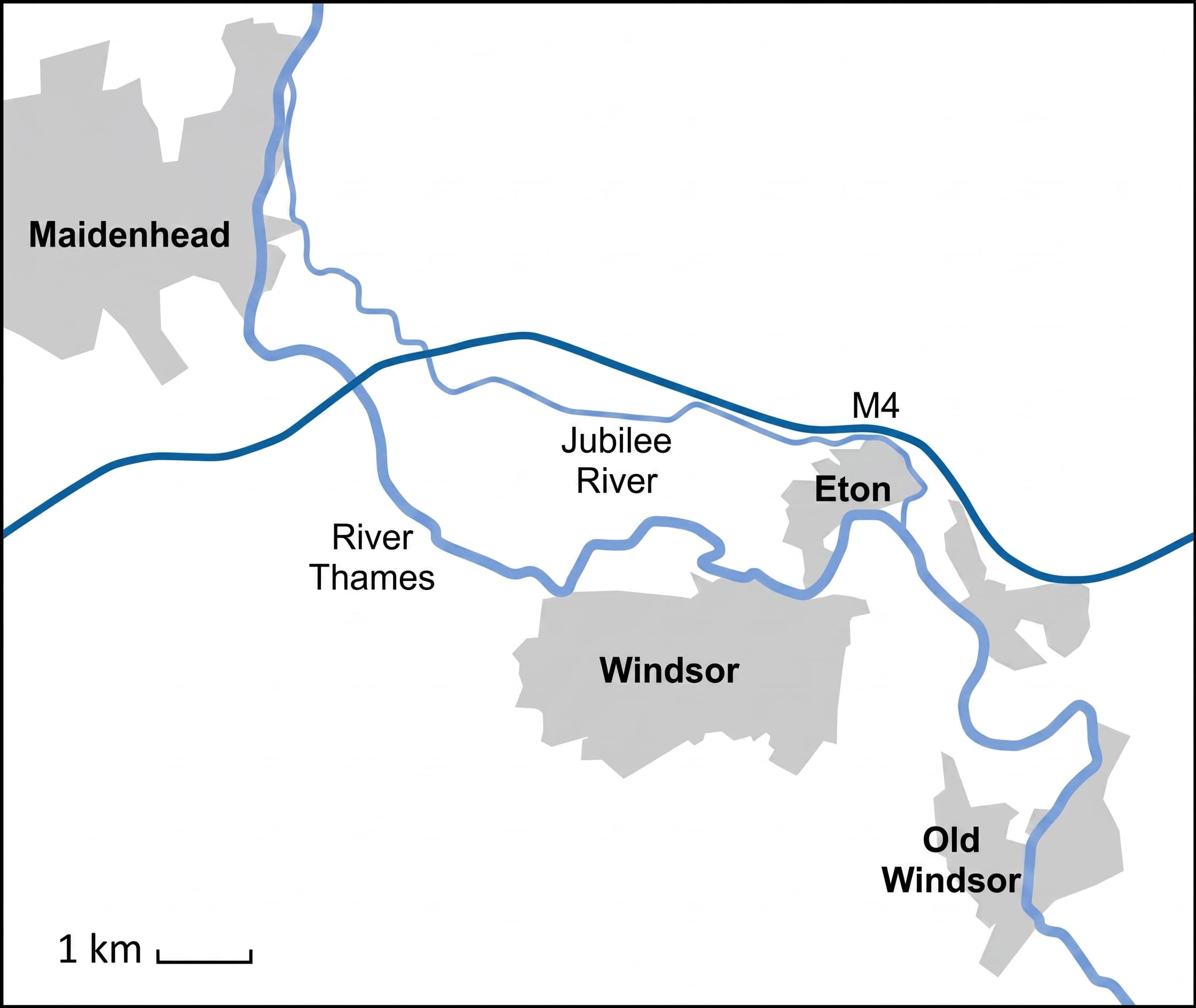
Flood managers may also find it familiar in a scenario which they call the “escalator effect”, where a feedback loop exists between progressively higher levels of flood protection and floodplain development. The middle Thames valley, west of London, UK, saw rapid suburban expansion after the war. Historical floodplain areas, such as those where Maidenhead, Slough, and Datchet sit, were gradually encroached and asset exposure to flood risks increased dramatically. Major floods such as that in 1947 and 1968 increased demand for progressively raising flood protection through measures such as flood relief channels and embankments, while simultaneously, more intensive development took place due to perceived protection. This escalation eventually led to the birth of the Jubilee River project in the late 1990s where an artificial channel was build alongside the Thames to divert excess water to the downstream. Nevertheless, towns further downstream, such as Wraysbury, argue that, while offering protection to the Maidenhead-Windsor-Datchet reach, the Jubilee River simply redistributes flood risk instead of alleviating it.
Taken together, these challenges point to more spheres which have to be approached along the development of the National Water Network as an infrastructure system. Apart from engineering and technical feasibility, the uncertainty, governance, and demand management involved should also be understood as structural constraints that shape the sustainability of the project. Against this backdrop, several considerations would emerge.
First, adaptability needs to be prioritised over optimality. Given the uncertainties of the water system, particularly under the changing climate, limits of centralised and heavily engineered systems are clear. Resilient and sustainable infrastructure would require, instead of precision, tolerance of errors and quick adaptation to changes and disruptions. Strategies such as distributed design, redundancy and compartmentalisation, phased implementation, integration of nature-based systems, and scenario-based planning and decision-making would be convenient and well-suited.
Second, institutions may have to take precedence over infrastructure. Effective institutions not only make sure that information traverses hierarchical systems smoothly to avoid misinformed decision-making, but also balances interests and resolves conflicts, and most importantly, reduce the probability of governance failure. Complementary to the current top-down framework of the project, policies for transparency and accountability, market force and public participation, and bottom-up implementation are essential to ensure delivery of the desired outcomes and benefits of the system.
Third, demand management tends to hold more importance than increasing supply. The National Water Network largely works on the supply side of water and hazard protection, which risks driving up demands and tipping the balance. Therefore, China might have to continue its initiative in ‘building a water-saving society’ with even greater rigour and determination. Yet the success of demand management would be hinged on pervasive behavioural changes in water consumption, and consequently require participatory approaches and institutions instead of top-down enforcement.
Comments